


The story of vintage rugby jerseys
We all know it. It is a fashion statement, it’s warm and strong. It’s what you wear to support your club or country. You might still have one from your school days. Or multiple and you probably played in it when you were younger. It’s the original rugby jersey, the long sleeve cotton one. It’s what has gone one to be an item of choice not just in rugby, but for sailers, rappers and basically everyone. Sportswear is almost fully cotton nowadays, so in this page we will talk about the story of the rugby jersey.
|
1823 |
90’s |
1996 |
2003 |
Onwards |
|
|
rugby was invented |
rugby jerseys adapt to the sport |
rugby keeps on using traditional old school jersey, usually cotton |
Temex gets invented |
nike introduces polyester player shirts |
cotton shirts fade out of practice. Only being used as fan replica’s |
Rugby was invented
As the story goes William Webb Ellis picked up a ball in 1823 and then rugby came into existence. The William Webb Ellis trophy is now the name of the trophy fought over during the world cup making the story persist until this day. At least we know that rugby started in Rugby at the Rugby School in the 1830’s. Soon after that it spread through the school system to other schools and from schools to universities and then to sports club.
What they wore in the early early days of the sport was just their everyday wear which meant flannel shirts, basically everything accompanied with appropriate wear of those days.
The use of logos was also not all that common. Initially members of the england rugby team were asked to sew on the rose themselves when they first started using them.
Then, dedicated rugby jerseys started being made. Not out of everyday shirt materials like flannel, but out of wool. These were basically just wool knit jumpers and a beautiful example is the Cardiff 1876 jersey below. Wool was the performance fabric of the Victorian time. It was used for swimwear and of course cricket as we know today.
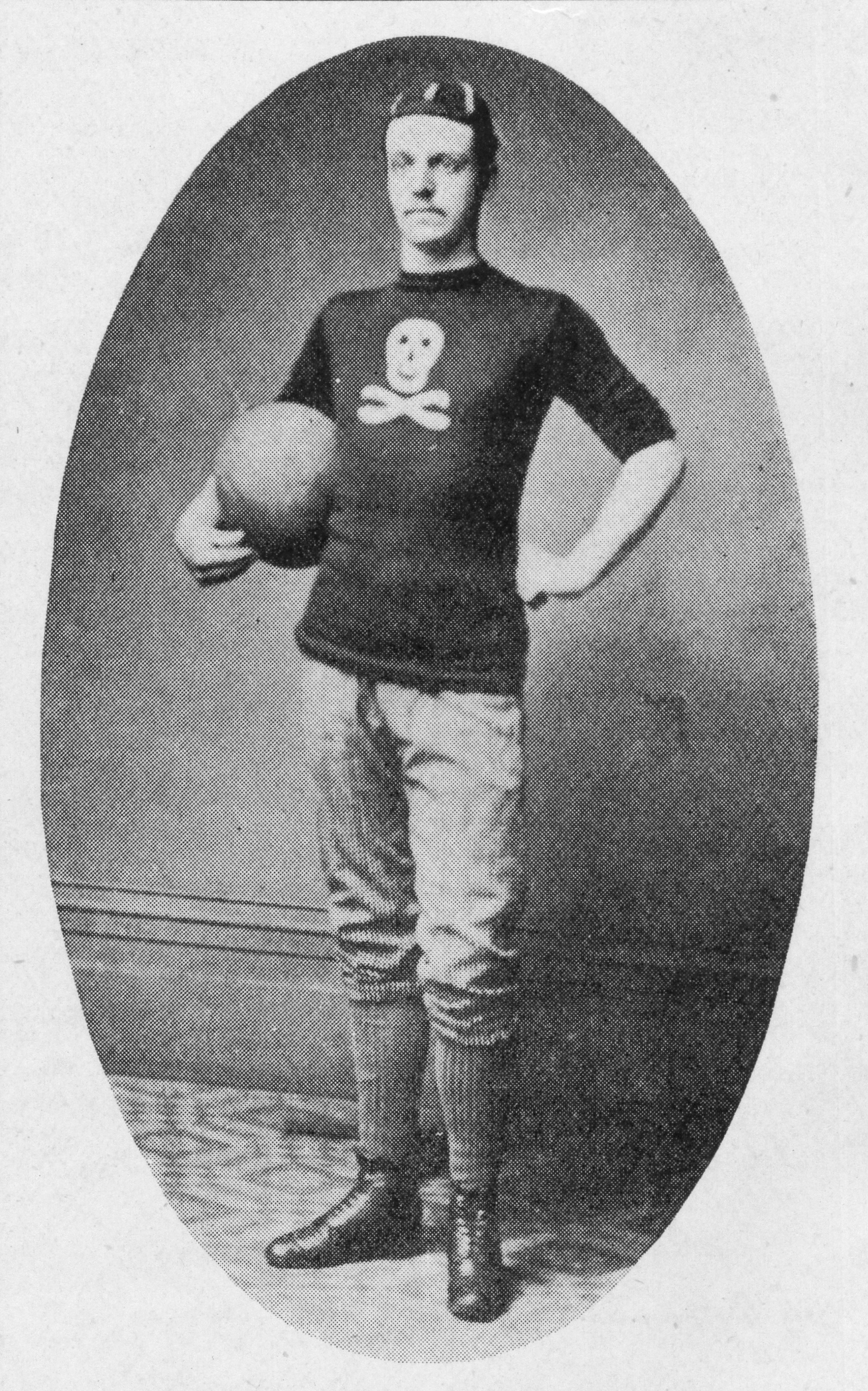
If you know wool as well as they did back then you will know that wool is incredibly itchy and it will make you much heavier in wet conditions. And the conditions on the rugby field obviously were wet. From the 1850’s on some teams started adopting cotton knit jerseys. It depended a little bit on what region you were from and which materials were easily available. Some teams dragged on using wool a little bit longer, but eventually around the 1900’s most rugby jerseys were now cotton.
And this is where we see some of the iconic features of the rugby jerseys take shape.
Stripes
First caps were used to distinguish players. White was the most common available colour used for sports in that time. It was also easy to wash. However in 1846 it was decided that instead of using caps that fell off players heads all the time, one team having plain white jerseys and the other having stripes was the way to go.
International teams had their own colours to distinguish themselves but BTW traditionally teams always used to have white alternate kits.
Also important to know is that cotton only allowed for the material to be woven in horizontal or vertical stripes. That’s why the iconic rugby jersey designs always consisted of stripes instead of other designs. Only when polyester took over cotton did that change, but more about that later.


Collar
The collar of rugby jerseys comes from the collars that were worn on normal dress shirts. Collars were seen as a formal element of clothing. Not all jerseys had collars in the beginning. Especially not the woolen ones. However when the cotton jerseys started to form, the cotton collar also got it’s shape. As rugby players played the game, they quickly learned that a big collar with long collar leaves will make it easier to grab the player by the neck. They still tackled quite high in those days.
What did they do to fix it? The made the collar smaller and the leaves shorter.
Numbering or lettering
Numbering and lettering originally was not used in rugby, like in many sports. But as you might see in many other aspects of rugby old ways were held onto in the sport for the sake of staying true to the sports character. Nowadays they will tell you it is to put the team above the individual. Bishops the school in South Africa still has no numbers on the back of their jerseys to this day even though they play at the highest level.
Actual numbers were starting to be used around the 1900’s during the international matches so spectators could differentiate players. This paragraph is called numbering or lettering for a reason. Back in the days there were no clear rules on what should be on the back of the jerseys. That’s why teams also had letters on the back. And since the alphabet holds 26 letters it is in some ways even more useful than using numbers. Leicester and Bristol are famous for having used numbers on the back of their jerseys for decades until the professionalisation of rugby created stricter rules in 1995.
Smaller features
Playing conditions were harsh and the jerseys needed to be able to handle a lot. Take a look back at some old rugby jersey footage to see how much that actually means. So some features slightly adapted to accommodate to the sport. One of the was the button. In the beginning jerseys had lots of buttons, but eventually those weren’t really necessary anymore. So jerseys changed to have only a few buttons or even one. And the material of the button changed to rubber. Rubber was flexible and wouldn’t hurt the opponent or the player himself if any collision happened. Another reminder that players tackled really high in those days.
|
Material |
Time |
|
Flannel |
Early days of rugby |
|
Wool |
1876- |
|
Cotton |
1900- |
|
Polyester |
2003 - |
The beginning of branding
Umbro was the first to put sponsoring on jerseys in the 70’s for england and adidas was quickly to follow up on that with their France and Wallabies jerseys.


A few years after that in 1892 Canterbury released their own branded shirts. They had been a manufacturer for ages, but always in the background. Since the start of branding there were more reasons for brands to make their jerseys stand out and sell out instead of just representing the country. That’s when the age of the more iconic jerseys for the collector really started.
But this was still before 1995. The sport was not professional and for international teams, branding on the world cup was illegal. That’s why they tried to find a way around it by sponsoring the tracksuits the players wore.
The Age of iconic rugby jerseys
Examples of such memorable jerseys may be found in the super rugby jerseys or super 12 as it was called at that time. Others can include European clubs which were on track to start experimenting with making unique kits every year. Some examples like Bath, Stade Francais, the Chiefs and the brumbies can be found below.


The end of the rugby jersey
After 1995 when professionalisation became legal, there was more incentive for teams to look for ways to professionalise everything on and off the field. This also included the sportswear. And where most sports had already moved on to polyester rugby had clung on to its old ways like it always does until a deciding moment.
Rugby couldn’t just copy football jerseys or something from other sports as it would not work for its violent nature. Some teams and brands were quietly trying out polyester sportswear but it all changed in 2003.
One aspect of rugby is that you want to evade tackles, but the old jerseys were boxy and oversized which made it easy to cling on to. Tight jersey would have an advantage. And then after some time of development Nike came out onto the 2003 world cup with never seen before tight polyester jerseys. They were impossible to grab and soon all teams and brands followed.

What now?
Since the switch to polyester rugby jerseys, the retro cotton ones are going extinct. Rugby Cottons started out by collecting vintage jerseys. We soon found that reselling them would be fun, but they are a finite resource. Most of them are more than 20 years old now and the amount of jerseys that would be circulating would stop. We didn’t want to capitalise on that and increase the tempo in which old vintage jerseys would become unavailable or more expensive.
That’s why our mission soon became clear. We need more NEW cotton rugby jerseys. A lot of clubs try with their supporters jerseys, but they get the details wrong. We need jerseys to last and to be handed down, just like what happened to the old jerseys.
Check it out on designer.rugbycottons.com